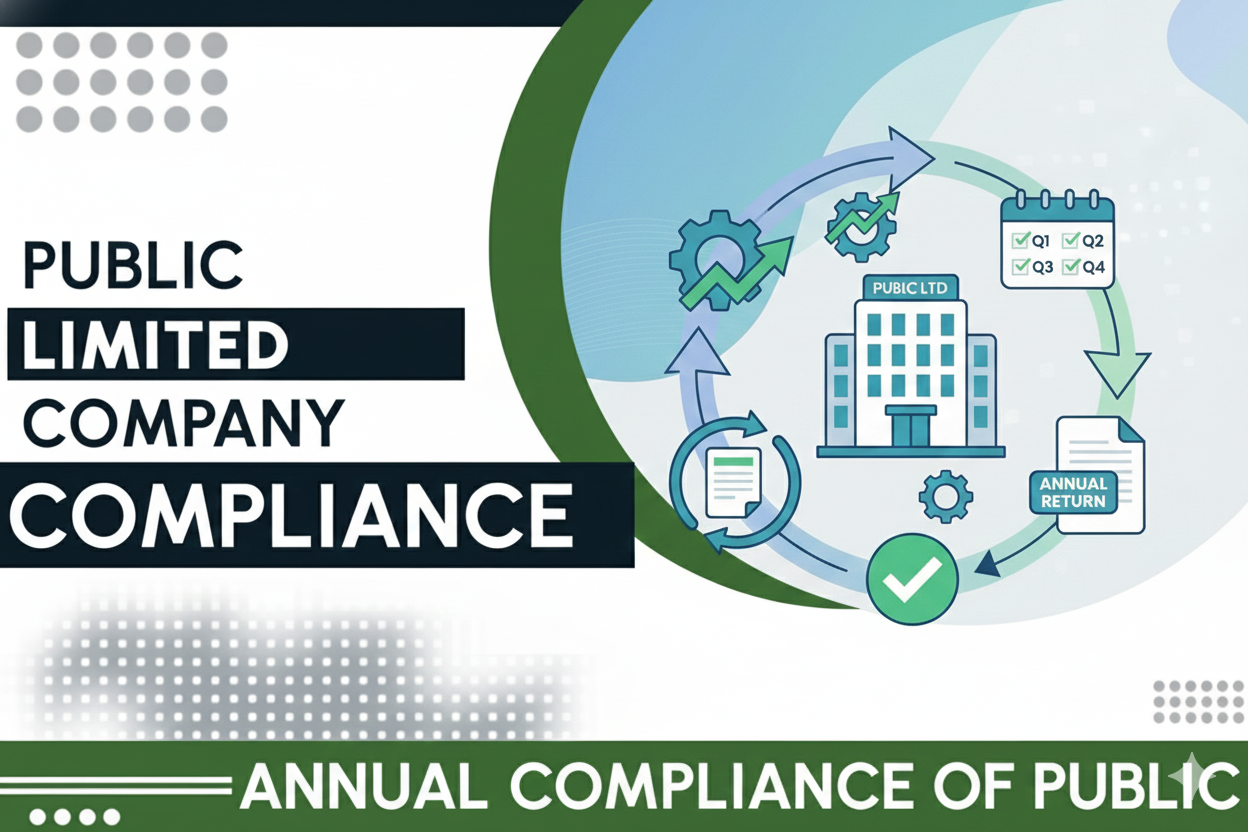
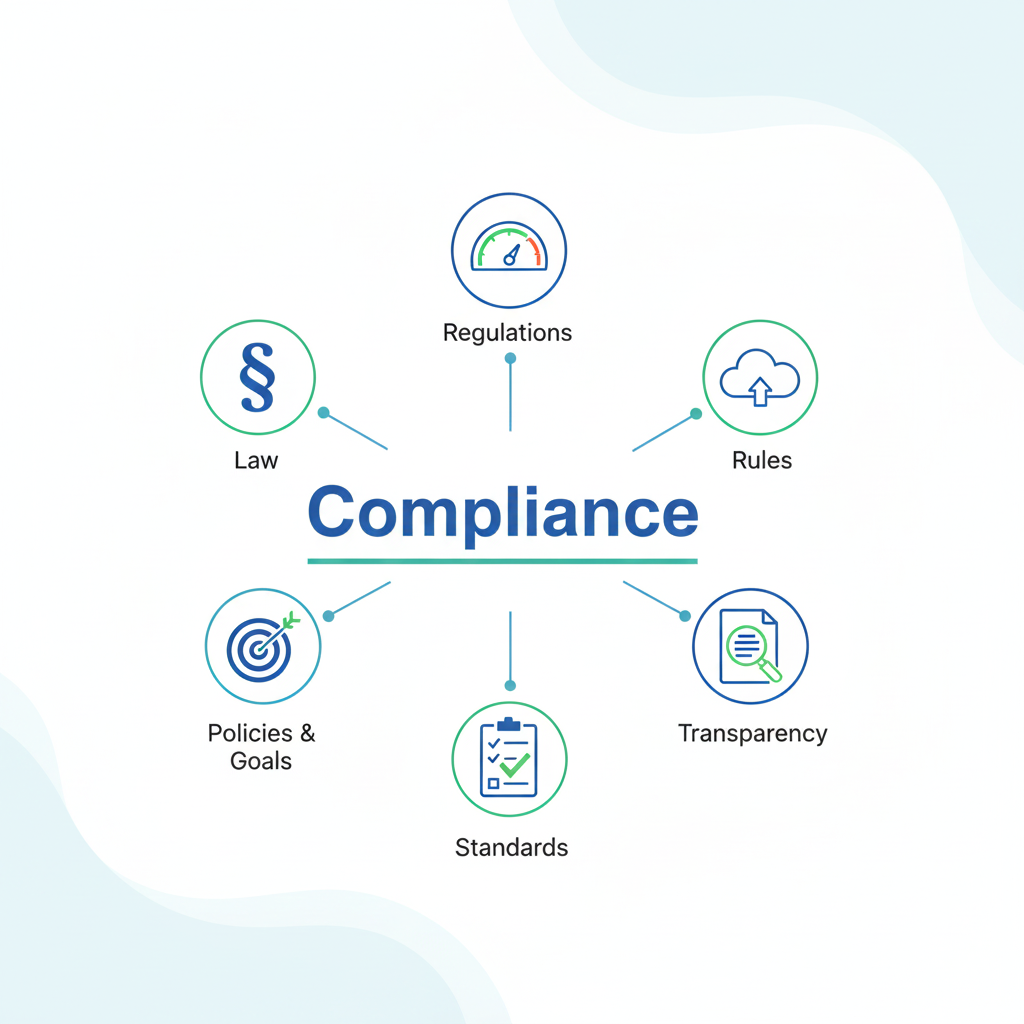
Annual Compliances for Public Limited Companies
Key Statutory and Audit Requirements specific to Public Entities
Annual compliances for Public Limited
Certification of Annual Return in case of listed company:It is mandatory to get the certification if the listed company having paid up share capital of 10 Crores or more and turnover of 50 Crores or more, from Company Secretary in Practice. The certificate shall be in FORM MGT-8.
Every Listed Company Public company if having paid up share capital of equal to or more than 50 Crores. Every public company having a turnover of 250 Crores or more has to obtain secretarial audit report in form MR-3 from Practicing Company Secretary.
All directors are required to file a form to do the KYC with the RoC. If the form has already been submitted, OTP verification over email and mobile number is required. Otherwise, new directors must submit the form.
Mandatory Secretarial Audit Report (MR-3)
Requirement and Thresholds:
A Secretarial Audit Report in Form MR-3 from a Practicing Company Secretary is mandatory for every Listed Company, and every Public Company meeting the following thresholds:
- Paid-up Share Capital of Rs 50 Crores or more
- Turnover of Rs 250 Crores or more.
Certification of Annual Return (MGT-8)
When MGT-8 is Required:
The Annual Return (MGT-7) must be certified by a Practicing Company Secretary in Form MGT-8 if the listed company meets certain criteria, ensuring higher governance standards.
- Paid-up Share Capital of Rs 10 Crores or more, AND
- Turnover of Rs 50 Crores or more.
General Mandatory Compliances
| Compliance | Requirement / Form | Due Date |
|---|---|---|
| Director KYC | Filing/Verification via DIR-3 KYC (for all Directors). | On or before 30th April of the immediate next Financial Year. |
| Return of Deposits | Filing with RoC in FORM DPT-3 (Rule 16 of Deposit Rules). | On or before 30th June of every year. |
| Annual Filings (Common) | Filing of Financial Statements (AOC-4) and Annual Return (MGT-7). | Within 30 days and 60 days of the AGM, respectively. |
Choose Your Plan
Professional solutions tailored for Annual Compliance Public Limited
Basic Plan
Every month payment option Available. Prices are inclusive of GST
- Turnover less than 30 lakhs
- DIR E-KYC of directors
- AOC-4 financial statement and other documents
- MGT-7 (annual return)
- ADT-1 if applicable
- INC-20A if applicable
- DPT-3 if applicable
- Board resolution preparation
- Directors report
- GST filing including GST 9
- Income Tax filing of Limited Company
- Assistance & filing of audit report
- Book-Keeping and Accounting are not part of this package
Standard Plan
Every month payment option Available. Prices are inclusive of GST
- Turnover less than 80 lakhs
- DIR E-KYC of directors
- AOC-4 financial statement and other documents
- MGT-7 (annual return)
- ADT-1 if applicable
- INC-20A if applicable
- DPT-3 if applicable
- Board resolution preparation
- Directors report
- GST filing including GST 9
- Income Tax filing of Limited Company
- Assistance & filing of audit report
- Book-Keeping and Accounting are not part of this package
Premium Plan
Every month payment option Available. Prices are inclusive of GST
- Turnover less than 200 lakhs
- DIR E-KYC of directors
- AOC-4 financial statement and other documents
- MGT-7 (annual return)
- ADT-1 if applicable
- INC-20A if applicable
- DPT-3 if applicable
- Board resolution preparation
- Directors report
- GST filing including GST 9
- Income Tax filing of Limited Company
- Assistance & filing of audit report
- Book-Keeping and Accounting are not part of this package
FAQ's on Annual Compliances For Public Limited
Your Questions Answered
What is the key difference in compliance between a Public and Private Company?
Public companies have significantly stricter compliance requirements, especially regarding disclosure and corporate governance, due to their ability to raise funds from the public. They must comply with the Companies Act, 2013, and, if listed, with SEBI Regulations.
What is the quorum requirement for a Public Company's Annual General Meeting (AGM)?
The quorum (minimum number of members required to be present) for a Public Company's AGM is based on its total number of members: 5 members (if up to 1,000 members), 15 members (if 1,000 to 5,000 members), and 30 members (if over 5,000 members).
What are the two mandatory annual ROC filings and their due dates?
The company must file Form AOC-4 (Financial Statements) within 30 days of the AGM, and Form MGT-7 (Annual Return) within 60 days of the AGM. Both are mandatory every financial year.
When is a Secretarial Audit Report (Form MR-3) mandatory?
A Secretarial Audit Report in Form MR-3 is mandatory for all Public Companies that meet certain thresholds: a paid-up share capital of ₹50 Crore or more OR a turnover of ₹250 Crore or more in the preceding financial year.
When is the Annual Return Certification (Form MGT-8) required?
Form MGT-8 is a certification of the Annual Return (MGT-7) by a Practicing Company Secretary. It is mandatory for Public Companies having a paid-up capital of ₹10 Crore or more OR a turnover of ₹50 Crore or more.
How many Board Meetings must a Public Company hold annually?
A Public Company must hold a minimum of four Board Meetings every year. The gap between any two consecutive Board Meetings must not exceed 120 days.
Is it mandatory for a Public Company to file resolutions in Form MGT-14?
Yes, unlike many Private Companies, a Public Company is generally required to file Form MGT-14 with the ROC within 30 days of passing both special resolutions and certain important Board resolutions (e.g., approving financial statements, directors' report).
What are the additional compliance obligations for a Listed Public Company?
A listed public company faces more stringent reporting and governance requirements, including quarterly financial results, composition of the Board (e.g., Independent Directors), and insider trading restrictions, all mandated by the SEBI Listing Obligations and Disclosure Requirements (LODR) Regulations, 2015.